Ever received a message ending in TTYL and paused for a second? You are definitely not alone. Even though this abbreviation has been around for years, people still search for its exact meaning every single day and for good reason. Its tone and intent can shift depending on who is sending it and where.
At its core, TTYL stands for “Talk To You Later” a casual, friendly way to wrap up a conversation without making it feel final. It first appeared in early internet chat rooms and instant messaging platforms, then moved into SMS texting, and today it is everywhere, from WhatsApp and Instagram DMs to TikTok comment sections and Discord servers.
In this complete 2026 guide, you will learn what TTYL means in text, how it is used across different platforms, real chat examples, the right way to reply, and when it is better to avoid it altogether.
What Does TTYL Mean in Text?
Simple Definition
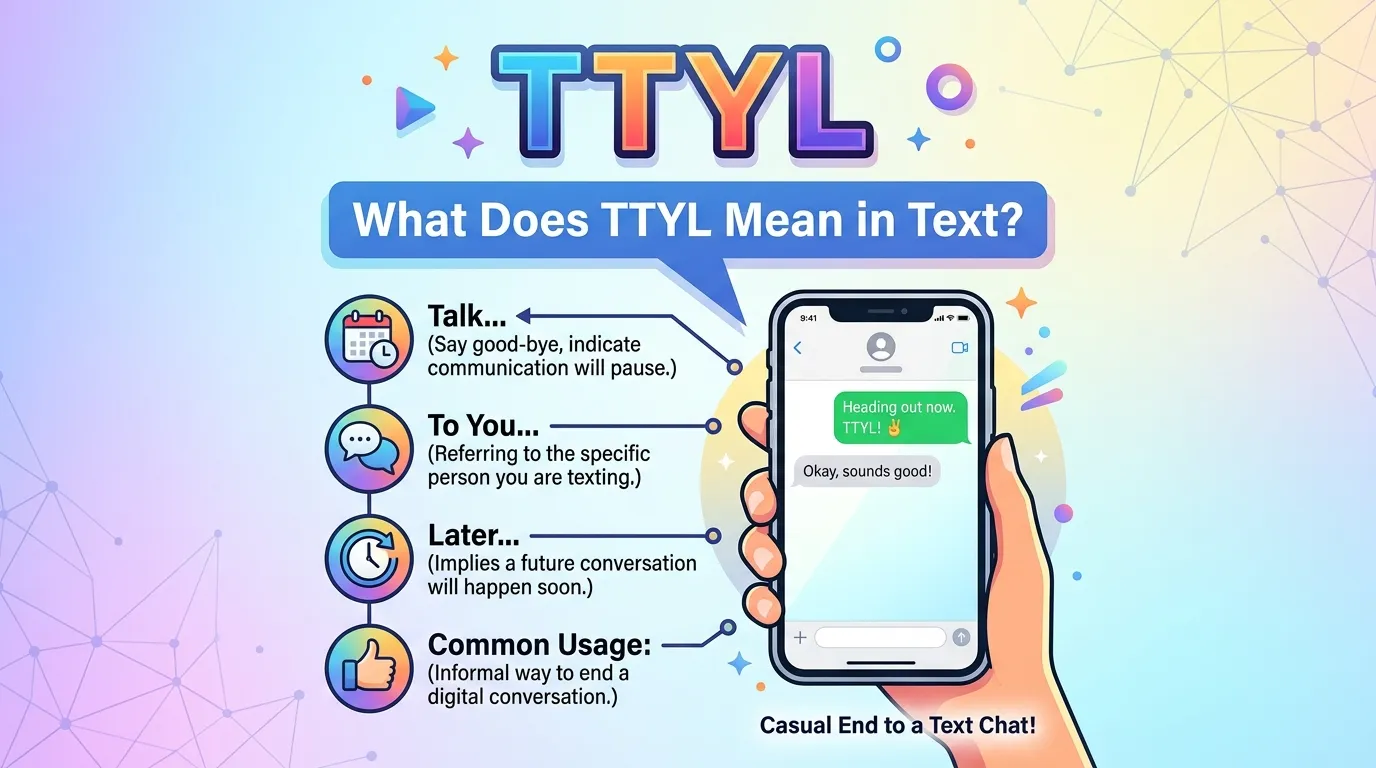
TTYL stands for “Talk To You Later.” It is one of the oldest and most widely recognized internet acronyms used in texting.
People use TTYL when they need to leave a conversation but want the other person to know they’ll continue talking later.
Examples include:
- I have to leave now. TTYL.
- Going to class. TTYL!
- I’ll message you tonight. TTYL.
Unlike saying “goodbye,” TTYL suggests the conversation is only paused, not ended permanently.
Is TTYL Slang or an Abbreviation?
TTYL is technically an acronym because each letter represents the first letter of a word.
It is also considered internet slang because it has become part of everyday online communication.
People often use TTYL alongside other abbreviations like:
- LOL
- BRB
- IDK
- IMO
- OMG
These acronyms help people communicate quickly without typing full sentences.
Where People Use TTYL
TTYL on TikTok
TikTok users often use TTYL in comments and direct messages when ending a conversation.
Example:
“I have to go live later. TTYL!”
TTYL on Snapchat
Snapchat conversations are usually short and casual.
Many users finish chatting by sending:
“TTYL 😊”
This lets the other person know they’ll continue chatting later.
TTYL on Instagram
Instagram users commonly use TTYL in direct messages after chatting.
Example:
“I have dinner now. TTYL.”
TTYL on WhatsApp
WhatsApp is one of the most common places where TTYL appears.
Friends, classmates, and family members often end conversations with TTYL because it’s short and friendly.
Example:
“See you tomorrow. TTYL.”
TTYL in SMS Text Messages
Traditional text messaging still includes TTYL.
Although messaging apps are more popular today, many people continue using TTYL in regular SMS conversations because almost everyone understands its meaning.
Real Chat Examples
Example 1
A: Are you free tonight?
B: I have football practice.
A: No worries. TTYL.
Example 2
A: I’m heading to work.
B: Have a good shift!
A: Thanks. TTYL.
Example 3
A: Did you finish your homework?
B: Almost.
A: Okay, TTYL.
Example 4
A: Mom’s calling me.
B: Go ahead.
A: TTYL.
Example 5
A: Good luck on your exam!
B: Thank you!
A: TTYL.
Example 6
A: My phone is about to die.
B: Charge it!
A: TTYL.
Example 7
A: Thanks for helping me today.
B: Anytime!
A: TTYL.
Example 8
A: Boarding my flight now.
B: Safe travels!
A: Thanks. TTYL.
Example 9
A: Want to play later?
B: Sure!
A: Awesome. TTYL.
Example 10
A: I’m going to sleep.
B: Sleep well!
A: TTYL tomorrow.
How to Reply When Someone Says “TTYL”
Your reply depends on your relationship with the sender and the tone of the conversation.
Funny Replies
- Don’t forget about me! 😄
- Only if you promise to text back!
- I’ll be waiting.
- Better not disappear!
Casual Replies
- Sounds good.
- Talk soon.
- See you later.
- Bye!
Friendly Replies
- Take care!
- Have a great day.
- See you later!
- Talk soon!
Neutral Replies
- Okay.
- Thanks.
- Catch you later.
- See you soon.
If you’re unsure how to reply, simply choose a polite response that matches the conversation.
Is TTYL Rude or Offensive?
No. TTYL is generally considered friendly and polite.
Most people use it simply to let someone know they’re ending the conversation for now.
However, context matters.
TTYL is appropriate when:
- Talking with friends
- Chatting with family
- Messaging classmates
- Speaking casually
You should avoid using TTYL when:
- Writing formal emails
- Contacting clients
- Sending business proposals
- Communicating in professional situations where complete sentences are expected
Who Uses This Term?
TTYL is used by people of all ages, but it’s especially popular among:
- Teenagers
- College students
- Millennials
- Gen Z users
You’ll commonly see TTYL on:
- TikTok
- Snapchat
- Facebook Messenger
- Discord
- SMS
Although newer slang appears every year, TTYL remains one of the most recognized internet acronyms.
Origin of the Term
TTYL became popular during the early days of online messaging in the 1990s.
People using AOL Instant Messenger (AIM), MSN Messenger, Yahoo Messenger, and internet chat rooms needed faster ways to communicate.
Instead of typing “Talk To You Later,” they shortened it to TTYL.
As texting became more common, the acronym spread to mobile phones, social media, and messaging apps.
Today, TTYL is understood around the world and continues to be one of the most widely used texting abbreviations.
Comparison Table
| Term | Meaning | Type | Usage | Popularity |
| TTYL | Talk To You Later | Acronym | Ending conversations | Very High |
| IDK | I Don’t Know | Acronym | Expressing uncertainty | Very High |
| IDC | I Don’t Care | Acronym | Showing indifference | High |
| IMO | In My Opinion | Acronym | Sharing opinions | High |
| BRB | Be Right Back | Acronym | Temporary absence | Very High |
Real-World Usage Example
Imagine you’re chatting with your best friend on WhatsApp while getting ready for school.
Just as you’re about to leave, you send:
“I have to catch the bus. TTYL!”
Your friend immediately understands that you’re busy now but plan to continue the conversation later.
Similarly, a coworker might message:
“I have another meeting. TTYL.”
Or a family member could text:
“Going shopping. TTYL.”
In every situation, TTYL politely ends the conversation without sounding unfriendly.
FAQs:
What does TTYL mean in text messages?
TTYL means “Talk To You Later.” It’s used to politely end a conversation while letting the other person know you’ll chat again later.
What does TTYL mean on TikTok?
On TikTok, TTYL has the same meaning. People use it in comments and direct messages before leaving a conversation.
Is TTYL slang?
TTYL is an internet acronym that has become part of modern online slang.
Is TTYL rude or offensive?
No. TTYL is friendly and respectful. However, it’s best to avoid using it in formal business communication.
How should you reply to TTYL?
You can reply with:
- Talk soon!
- See you later!
- Bye!
- Take care!
- Catch you later!
Choose whichever response feels natural for your conversation.
Conclusion:
Now you know the answer to what TTYL means in text. In most conversations, TTYL simply means “Talk To You Later” and is used to end a conversation politely while showing you’ll continue chatting another time.
Whether you see TTYL on TikTok, Snapchat, Instagram, WhatsApp, or regular text messages, it’s one of the easiest internet acronyms to understand. It’s friendly, casual, and suitable for everyday conversations with friends, classmates, and family members.
However, in formal emails, business communication, or professional settings, it’s usually better to write the full phrase instead of using the abbreviation.
The next time someone sends you TTYL, you’ll know they’re simply saying goodbye for now and they’ll talk to you later.

Joyce Meyer is a Christian author and Bible teacher passionate about sharing biblical wisdom and faith-based insights. She contributes to getmeanings.com helping readers explore the deeper meanings of Scripture.