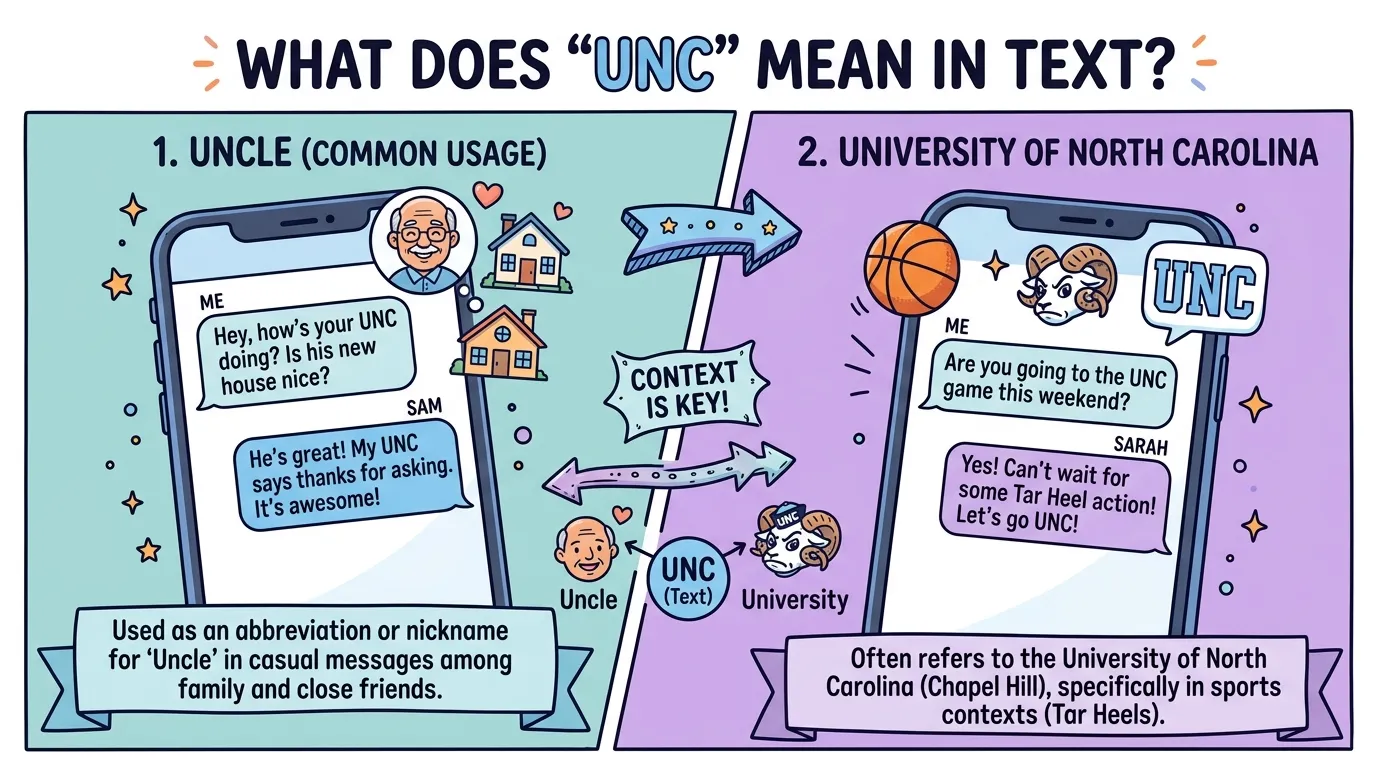
In today’s fast-moving digital world, text abbreviations and internet slang evolve constantly, leaving many people wondering what certain terms really mean.
One abbreviation that has recently gained attention across social media platforms like TikTok, Instagram, Snapchat, and X is UNC.
If you’ve been asking yourself, “What does UNC mean in text?”, you’re not alone. While the term is commonly used as shorthand for “uncle,” its modern usage often extends far beyond family relationships.
Depending on the context, UNC can symbolize wisdom, maturity, mentorship, or even become a humorous way of referring to someone who seems older than their peers.
Interestingly, some people also explore deeper spiritual and symbolic meanings behind words that repeatedly appear in their lives.
In this article, we’ll uncover the true meaning of UNC in texting, examine its cultural significance, explore possible spiritual interpretations, and discuss how this simple abbreviation connects to identity, relationships, personal growth, and modern communication.
What Does UNC Mean in Text? (Quick Answer)
Featured Snippet Answer
UNC in text usually means “Uncle.” It is commonly used as internet slang to refer to:
- An actual uncle
- An older man
- Someone perceived as mature or older
- A respected elder figure
- A playful nickname for someone acting older than their age
Example:
- “UNC knows all the old-school songs.”
- “Ask UNC for advice; he’s been through it before.”
On social media platforms such as TikTok, Instagram, X, and Snapchat, the term is often used humorously to describe someone who seems older, wiser, or out of touch with current trends.
Does UNC Appear in the Bible?
The short answer is no.
The abbreviation UNC does not appear in the Bible, nor is it a biblical name. It is a modern internet shorthand that developed through contemporary digital communication.
However, the idea behind UNC representing an elder, mentor, guide, or respected family figure has strong biblical parallels.
Throughout Scripture, older and wiser individuals play significant roles in guiding younger generations.
Biblical Examples of Elder Guidance
- Moses mentoring Joshua
- Paul guiding Timothy
- Family elders providing wisdom and instruction
These examples reveal that while UNC itself isn’t biblical, the concept of respected elderhood certainly is.
Biblical Connections to the Meaning Behind UNC
1. Wisdom Comes Through Experience
The Bible repeatedly teaches that wisdom often grows through years of experience.
“Gray hair is a crown of splendor.” — Proverbs 16:31
This verse reminds us that age can represent knowledge, endurance, and spiritual maturity.
In modern texting culture, calling someone “UNC” may sometimes acknowledge their life experience, whether seriously or humorously.
2. Mentorship and Guidance Matter
Scripture emphasizes learning from trusted mentors.
“The wise listen and add to their learning.” Proverbs 1:5
A positive interpretation of UNC can symbolize someone who offers guidance during life’s challenges.
3. Respect for Generations
The Bible encourages honoring older generations.
Even in today’s digital world, the underlying value of respecting wisdom remains relevant.
Spiritual Meanings Associated with UNC
Although UNC is not a biblical symbol, many people enjoy exploring deeper meanings behind words and recurring themes.
Here are several symbolic interpretations.
1. The Symbol of Wisdom
UNC may represent wisdom gained through experience.
Spiritually, this can remind us that growth often comes through:
- Patience
- Reflection
- Learning from mistakes
- Listening to others
The appearance of elder-related symbols can encourage humility and openness to learning.
2. A Reminder of Family and Belonging
An uncle is often viewed as a supportive family figure.
Spiritually, this symbolism may point toward:
- Community
- Support systems
- Healthy relationships
- Emotional security
Humans thrive when connected to others.
The recurring idea of family can remind us not to face life’s challenges alone.
3. Encouragement to Seek Guidance
Many people struggle because they try to solve everything independently.
The symbolism behind UNC may encourage:
- Seeking mentorship
- Asking for help
- Learning from experienced individuals
- Remaining teachable
This reflects a timeless biblical principle that wisdom grows through counsel.
4. Maturity and Personal Growth
Sometimes UNC is used jokingly to describe someone acting older.
Yet spiritually, maturity is not merely about age.
True maturity involves:
- Emotional control
- Self-awareness
- Responsibility
- Compassion
These qualities contribute to lasting personal development.
5. Identity Beyond Appearance
In today’s world, many people experience identity confusion.
Social media constantly pressures individuals to fit certain expectations.
The symbolic meaning of UNC can remind us that identity grows through character rather than trends.
The Bible teaches that lasting worth comes from who we are internally, not merely how others perceive us.
6. The Value of Legacy
Older generations often leave behind lessons for future generations.
UNC symbolism can represent:
- Passing on wisdom
- Leaving a positive impact
- Building meaningful relationships
- Contributing to future growth
Legacy is one of the most powerful forms of purpose.
What Does UNC Mean Spiritually in Modern Life?
The popularity of terms like UNC reflects something deeper in modern culture.
Many people today struggle with:
- Anxiety
- Loneliness
- Identity uncertainty
- Lack of mentorship
- Social comparison
The symbolic image of a wise elder reminds us of the importance of guidance and community.
Modern Example
Imagine a young professional overwhelmed by career decisions.
An older mentor provides perspective gained from years of experience.
In this scenario, the “UNC” figure represents stability, wisdom, and encouragement.
Seeing UNC Repeatedly: Is It a Spiritual Sign?
Some individuals notice certain words repeatedly appearing online and wonder whether they hold spiritual significance.
Spiritual Perspective
From a spiritual viewpoint, repeated symbols can sometimes prompt reflection.
Questions to ask include:
- What lesson am I currently learning?
- Do I need guidance?
- Am I ignoring wise advice?
- Am I seeking meaningful relationships?
The symbol itself may not be supernatural, but it can encourage personal growth.
Balanced Perspective
It’s important to remember:
Not every repeated word is a divine message.
Sometimes recurring symbols simply attract our attention because they connect with our current thoughts or emotions.
A balanced approach combines spiritual reflection with practical wisdom.
Psychological Meaning of UNC and Repeated Symbols
Psychology offers fascinating insights into why certain words capture our attention.
The Subconscious Mind
The brain constantly scans for patterns.
When something feels emotionally relevant, we notice it more often.
This phenomenon is called selective attention.
If themes of guidance, age, family, or mentorship are important in your life, your mind may naturally become more aware of terms like UNC.
Identity Formation
Psychologists explain that identity develops through:
- Relationships
- Life experiences
- Social feedback
- Personal reflection
Symbols associated with mentorship and wisdom can resonate strongly during periods of change.
Emotional Symbolism
The human mind often attaches emotional meaning to words.
UNC may symbolize:
- Safety
- Guidance
- Stability
- Support
- Life experience
These associations vary from person to person.
Practical Life Lessons from the Meaning Behind UNC
Whether viewed spiritually, psychologically, or socially, several valuable lessons emerge.
Practice Reflection
Spend a few minutes each day asking:
- What am I learning?
- Who influences me positively?
- What wisdom have I ignored?
Cultivate Gratitude
Appreciate mentors, parents, teachers, and supportive figures.
Gratitude strengthens emotional well-being and relationships.
Develop Emotional Awareness
Pay attention to:
- Reactions
- Triggers
- Thought patterns
- Emotional needs
Self-awareness is a foundation of maturity.
Seek Wise Counsel
Don’t navigate major decisions alone.
Trusted guidance often prevents unnecessary mistakes.
Maintain a Prayer Habit
Prayer encourages:
- Clarity
- Peace
- Perspective
- Spiritual growth
Many people find that regular prayer helps reduce anxiety and increase resilience.
Common Examples of UNC in Text Messages
Here are some everyday uses:
- “UNC always has the best advice.”
- “You’re becoming UNC with those dad jokes.”
- “Ask UNC how things were done back then.”
- “UNC is keeping everyone grounded.”
In most cases, the term refers to age, experience, wisdom, or a respected family-like role.
FAQs:
What does UNC stand for in texting?
UNC usually stands for “Uncle.” It can refer to an actual uncle or be used as slang for an older, respected, or mature person.
Is UNC mentioned in the Bible?
No. UNC is a modern abbreviation and does not appear in biblical texts.
Does UNC have a spiritual meaning?
While not inherently spiritual, UNC can symbolize wisdom, mentorship, maturity, family connection, and guidance.
Why do I keep seeing UNC everywhere?
Repeated exposure may result from psychological pattern recognition, personal relevance, or a growing awareness of themes connected to guidance and relationships.
Is seeing UNC a sign from God?
Not necessarily. While some people view recurring symbols as opportunities for reflection, not every repeated word should be interpreted as a divine message.
Final Thoughts:
At its simplest, UNC means “Uncle” in text messages and online slang. Yet beneath this modern abbreviation lies a timeless idea that resonates across cultures and generations: the value of wisdom, guidance, family, and personal growth.
Whether UNC reminds you of a trusted mentor, a respected elder, or simply the importance of learning from experience, its symbolism points toward something deeply human the desire to belong grow and find direction.
Life often becomes clearer when we remain teachable, appreciate those who guide us, and continue developing our character. While not every symbol is a divine sign, meaningful reflections can emerge from unexpected places.
Perhaps the most valuable lesson behind UNC is this: true identity is not found in trends, labels, or online opinions. It is built through wisdom, relationships, purpose, and hope. As you continue your journey, remember that growth is always possible, guidance is available, and every season of life carries an opportunity to become wiser, stronger, and more grounded in who you are meant to be.

Joyce Meyer is a Christian author and Bible teacher passionate about sharing biblical wisdom and faith-based insights. She contributes to getmeanings.com helping readers explore the deeper meanings of Scripture.